
Call about standing water when it persists in the same place, has started collecting in a new area or coincides with indoor staining. A flat or low-slope roof still needs a way to drain. The assessment should check the path to roof drains or scuppers and the condition of the membrane, seams and openings nearby.
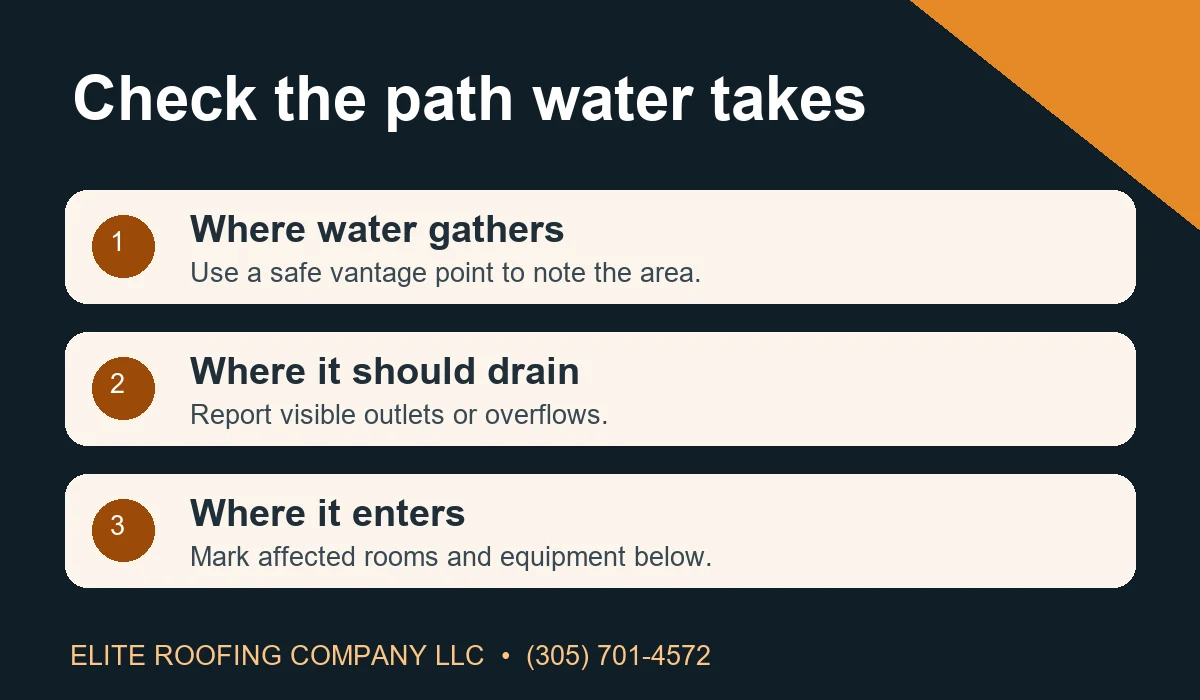
Locate the problem without going onto the roof
Begin from a safe vantage point, such as a window with a view of the roof or the ground near an outlet. Mark where water appears on a sketch if you can see it. Record when the rain stopped and whether the same area still holds water later. Tell the roofer whether you can see an outlet and whether it seems to be running. Leave rooftop access and drain checks to the professional. On a commercial site, include the roof level, building address and tenant space involved. A building plan helps identify which section to check when several roofs look similar.
Distinguish the roof surface from the drainage path
The assembly includes the main roof field, perimeter, curbs and openings as well as the outlets that take water away. Ask where water is supposed to move and which parts of the drainage path were visible at the assessment. A puddle beside an outlet can raise different questions from water repeatedly collecting far away from an outlet. A nearby parapet or wall may have its own flashing details to check. If an overflow or downspout behaved differently during the storm, describe the change. Track what you could directly see and let the assessor determine what to examine from the roof.
Mark the rooms and equipment below
When a ceiling stain or drip accompanies ponding, identify the occupied space below and the closest known roof feature. A leak can travel through building materials before appearing, so show the first wet spot as well as the area that became damp later. Look for records of recent work on HVAC equipment, pipe penetrations or rooftop additions. On an occupied building, get contact information for whoever controls roof and tenant access. For a house with a low-slope addition, note where the lower roof meets the higher one. Ask whether runoff from the higher roof is part of the assessment.
Ask how the roof will be evaluated
Discuss which roof sections will be assessed for surface condition, seams, flashings, curbs, drains and prior repairs. If moisture beneath the membrane is suspected, ask how it might be investigated and whether further work would need prior authorization. Get a description of limitations when roof access or concealed assembly layers affect what can be determined. Explain whether a section overflowed during a particular storm or shows the same pattern after normal rain. If the current ponding is new, share photos or records from before the change when available. A dated roof sketch can help compare observations across visits.
Compare options by the problem addressed
A localized membrane repair may address a specific weak point. Drainage work and material replacement involve other questions, including where water is intended to exit and whether existing wet materials can stay. Compare what each proposal says about the suspected source and any conditions it leaves for later review. Discuss whether the overall roof slope, drain locations or adjacent edges are part of the work. If replacement is being considered, get the proposed roof system and details at roof levels, openings and perimeters in writing. Ask how the project will handle hidden conditions and what the handover documents will include.
Coordinate access and interruptions in advance
At a business, estimate when deliveries arrive, which tenants need access and what work could interfere with equipment. For a condo or multifamily property, identify building management approval and safe roof access routes before the assessment. Confirm who handles any equipment interaction and which interior areas should remain clear during work. Have roof records and roof maps available for people who make decisions. If a membrane repair serves a small area, mark the location for handover and share it with anyone doing later work nearby. Ask how the plan accounts for expected rain and the continued drainage of the surrounding surface.
Track the same location after the work
Keep the before photos, findings and scope together. If you can review the area safely after a rain, make a dated note about what you see from your usual observation point. Report a recurring puddle or new interior moisture alongside the earlier record. When water appears after work that changed a roof detail, identify the trade, date and part of the building. Future assessments are easier when building managers can compare similar conditions and find the completed scope. Save any maintenance instructions, including information about who is responsible for roof outlets and whom to call if water is seen indoors.
Give the Miami office the useful facts
State the city, address, ZIP and the type of building. Explain whether water stays in the same place each time, which occupied space is affected and whether an outlet or overflow looks different from usual. Mention known repairs and equipment work. If there is active water entry, call and explain how quickly the indoor conditions are changing. Keep people clear of damaged ceilings and hazards. Ask the roofing team how the assessment will check both the affected roof surface and the drainage path, and whether the building manager or any tenant needs to be present.
Record more than a single puddle
Take notes at consistent points after different rain events so you can compare the location, apparent size and duration of standing water. Note whether a nearby outlet flowed and whether the same interior area showed a stain. Lighting, angle and time of day can affect an observation, so include those details if they make the photo easier to interpret. Give the roofer the full pattern during the assessment. The goal is to discuss drainage based on several observations and ask what would help distinguish a change in the outlet from a change in the roof surface.