
When the roof leaks after heavy rain, start inside the building. Keep people away from wet electrical equipment and damaged ceilings, record when and where the water appeared from a safe position, and call a roofer about the current condition. The stain is a useful observation. Its location alone gives the roofer only part of the evidence needed to locate the opening.
Make the affected space safe
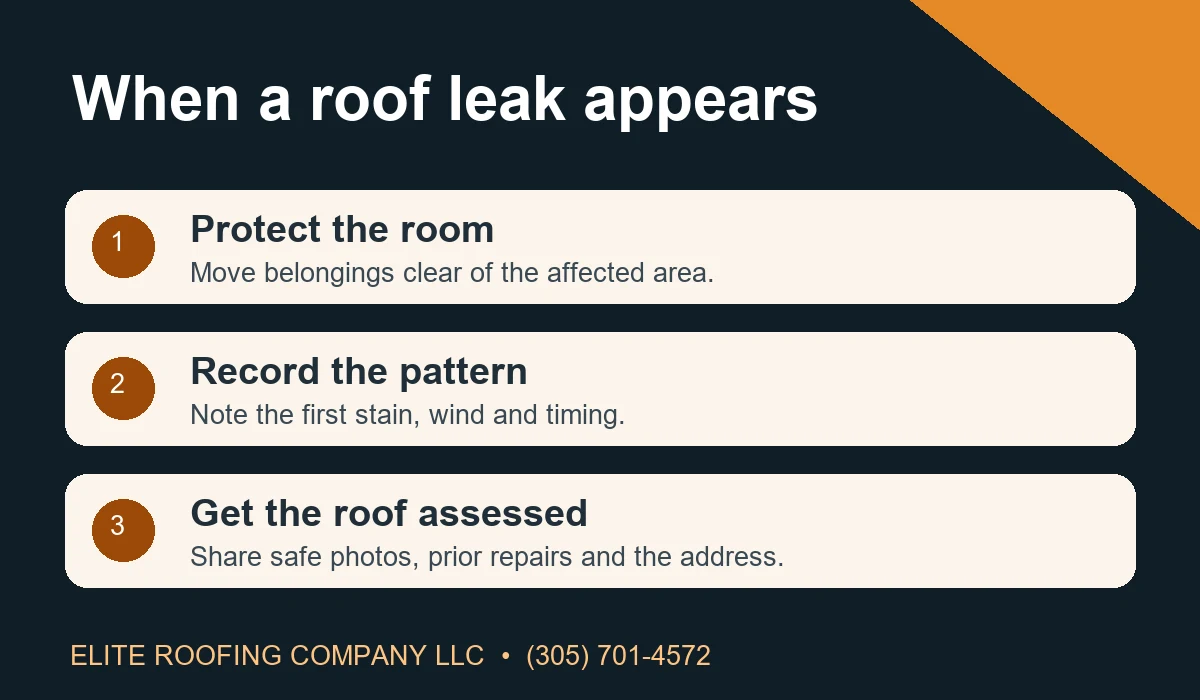
Keep people and pets clear of a sagging ceiling, falling material, standing water near electrical equipment or any unsafe floor. If there is an immediate danger, contact emergency services. When you can do so safely, move valuable items away from the affected space and tell other occupants which rooms to avoid. A property manager may need to notify tenants or staff and arrange access to the areas immediately above the affected space. Wait for safe conditions before taking photos. A snapshot from a doorway can provide a useful record of a room without putting anyone underneath a damaged ceiling. Leave climbing, climbing onto an adjoining structure, and opening the roof assembly to a professional.
Record when the water actually appears
Note when rain started, when you first saw a damp spot and whether it continued to grow after the rain eased. If rain blew strongly from one side of the building, write that down. Water showing only when wind hits a particular wall can raise different questions from drips that happen during every prolonged rainfall. Record whether the stain seems to dry between events and which room, wall or ceiling edge is affected. If a similar stain was previously painted over or the roof was patched in roughly the same area, record that too. Time-stamped photos and consistent room names make it easier to compare separate events.
Describe the roof sections above the room
Sketch the affected room and the exterior walls on a sheet of paper. Mark nearby roof levels, additions, skylights, vents, walls or mechanical equipment based on what you know. Explain whether the affected space is below the main roof or a porch or flat addition. A professional may need to trace a route from a joint, wall or higher roof area before deciding which section needs attention. On an occupied business or condo property, name the unit, floor and interior room. Report any other occupant who saw water around the same time. Each observation can help determine which parts of the roof and building to inspect.
Put past work beside the new evidence
Collect roof invoices, earlier inspection notes, permit documents and photos taken before the problem. Look for the schedule of work and the location of any patch. A recent flashing replacement by a roof opening is relevant even if the stain appeared in the next room. If rooftop equipment was installed or a vent was moved, identify where and when the work occurred. A roofer also needs to know whether the roof has separate materials on different levels. Bring the records as context and let the assessor connect them to the current conditions. Ask what can be compared from accessible areas and what might require opening a limited section.
Ask what would confirm the leak source
At the visit, start with your observations and ask the roofer to explain how the surrounding assembly and water path will be checked. The assessment may involve nearby flashings, changes of slope, roof penetrations or drainage details. For persistent water entry, ask what would suggest concealed wet materials and whether further investigation needs separate approval. The source matters because replacing a surface piece can leave a nearby transition untreated. Ask the assessor to explain what the proposed repair addresses and how it will be tied into adjacent materials. Get the affected roof area and any changes that could arise after opening it described in writing.
Prepare for a second look after the weather changes
If the leak has stopped by the time of the visit, share photos from the time it was active. Continue tracking changes from safe indoor spots while the roofing professional evaluates what is visible. If a repair goes ahead, keep the original photos, written scope and any follow-up instructions together. At the next rain, note whether the same room shows new dampness and whether the weather pattern was comparable. If a new spot appears, add it to your sketch instead of assuming it came from the same opening. A consistent record helps you explain whether the original issue seems to have returned or a different location needs assessment.
Make the callback specific
Give the Miami office the property street address, ZIP code and the best callback number. State whether water is still entering and whether a ceiling or electrical safety issue has been reported. Identify who can give access, what you know about the roof and whether there was recent work nearby. For a shared building, ask the manager who can approve roof access and work. If storm-related repairs are under consideration, verify which building department handles the address and ask what records will be needed for the proposed work. Share only the access and project details relevant to the discussion. Start with the address and what is happening today.
Track information needed for a decision
When you receive an estimate, read it alongside the leak record. Mark the room or roof section it addresses and check whether the proposal identifies the location, materials, adjacent details and the limits of the work. Ask how wet materials or deterioration discovered during removal would be handled. If a proposal describes a larger repair, ask which observations made that scope appropriate. The written record should give you enough information to approve the next step and explain it to anyone else responsible for the property. Put any expected follow-up or access instructions where the owner or manager can find them at the next rain.
Know what to keep with an inspection request
Keep a one-page summary so anyone handling the call can see the pattern quickly. Write down the relevant roof sections, the room that showed water, whether the problem is active and whether any repairs or equipment work preceded it. Supply photographs separately so the summary remains easy to read. Ask whoever will meet the roofer to identify safe access and share the records. If the site is occupied, explain which areas must stay available to tenants or staff, and how the office should contact the person who can approve access.