
Call the office
The desk is open every day from 8 AM to 8 PM at (305) 701-4572. Say where the building is and what the roof is doing.

Storm damage
A storm in Miami-Dade lifts edges, shifts tile, opens ridges, and drives rain under flashing that was fine the week before. Elite Roofing Company of Miami LLC looks at what changed and writes it down. The insurer still decides any claim.
Miami
Request a call. Four steps. We call back between 8 AM and 8 PM from the Miami office.
Wind gets under the first course, under ridge tile, and under coping metal. It does not need to remove a whole field to open a path. One lifted row at the eave is enough for the next rain band. Tile slides. Shingle tabs crease. Metal panels oil-can and fasteners back out.
Rain during the wind is the second half. Water that would have run off a slope is pushed uphill, into a valley, or over a parapet. Flat roofs that drained in a normal afternoon may pond when debris covers the bowl. The ceiling stain can wait until the storm is over and the sun is back.
Salt air is not the storm, but a storm shows what salt already weakened. A flashing that was rusted at the nail line tears there. Houses inland, in Kendall or Weston, see more of the wind and the debris than the salt. Houses on Miami Beach see all three.
Trees add their own damage: a limb on a slope, a branch that scraped the ridge, leaves packed into a scupper. That is storm damage too. The visit separates impact from age so the notes are useful.
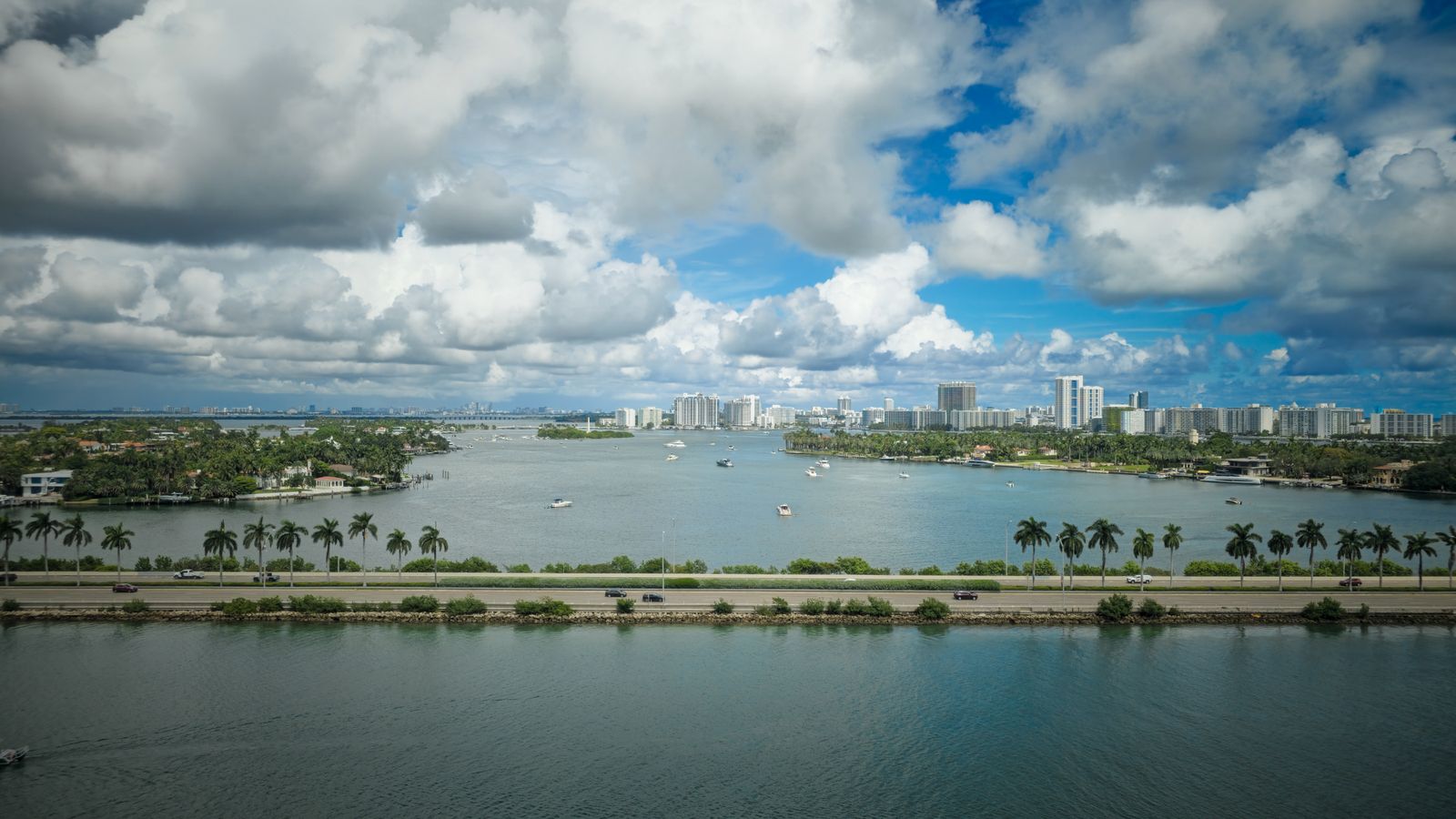
The same clouds can cross a tile roof in the Grove and a flat roof in a tower on one afternoon.
Photograph the ceiling, the wet wall, and anything on the ground that came off the roof. Do not climb a wet tile roof. Keep people out of a room if the ceiling is sagging. Call the office when it is open, 8 AM to 8 PM, and say the address.
If you plan to file a claim, call your insurer as well. The roofing visit describes visible damage: material, what moved, and where water entered. It does not approve a claim, set the insurer's price, or tell you the claim will be paid.
Temporary drying-in, when the roof can be reached safely, covers the opening until a full repair is scheduled. A tarp is a bridge to the repair. It is not the new roof. The office will say whether a dry-in is the next step or whether the opening can wait for the repair itself.
Storm visits use the same five steps, with extra attention to what changed since the last calm week. Bring your photos if you have them.
The desk is open every day from 8 AM to 8 PM at (305) 701-4572. Say where the building is and what the roof is doing.
A roofer looks at the slopes, the edges, the penetrations, and the drains from the places that are safe to walk.
You hear what is visible: the material, the flashing, and any opening the rain is using. The notes stay in ordinary language.
Repair stays in the conversation when the rest of the roof can remain. A new roof is the conversation when the deck, the underlayment, or the field of the roof is worn through.
If you want a claim, you call your insurer. The visit describes the roof. The insurer decides the claim.
Stay off wet tile and off any roof you do not already walk. Interior photos and a look from the yard are enough to start the call.
The office can describe the roof and be there when a time is set during open hours. The adjuster works for the insurer. The decision stays with the insurer.
That can be a repair. The notes say whether the underlayment tore when the tiles moved, because that is the part that sheds water.
Yes. Every day, 8 AM to 8 PM, including Saturday and Sunday.